Adrienne and Mena are abducted by Bane's werewolves
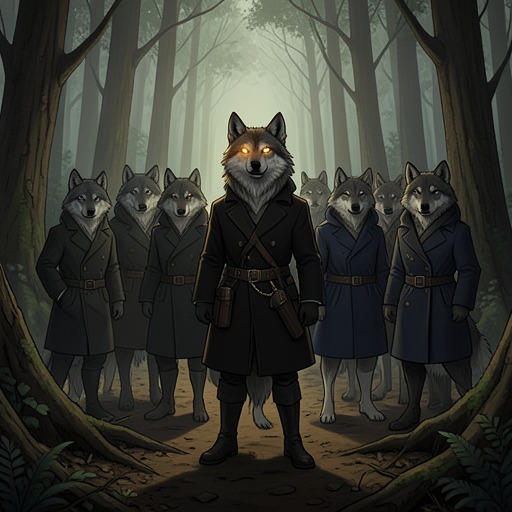
Insatiable Box Set: Books 1-4Adrienne and Mena are abducted by Bane's werewolves in a turning-point event that converts pursuit into organized captivity. A large white Ford pickup follows their car after they turn toward the Samsa compound, and the apparent uncertainty of the road becomes a trap: a blond werewolf reaches the vehicle, enters through the rear door, produces fur coats, and orders the women into the truck. The abduction is significant because Adrienne is not merely a traveler seized at random. She is Wilder's mate and therefore a political and familial target, while Mena is valuable as both a member of a rival line and a pregnant female whose safety is temporarily used as part of the bargain with her father.
Causes and Opportunity
Adrienne and Mena are vulnerable because they are traveling through an isolated landscape in a vehicle that can be stopped and watched without immediate human intervention. Adrienne recognizes that the old white truck is following them but tells Mena not to turn around, hoping to conceal their awareness. Her attempt at composure delays open resistance while the pursuers remain close enough to act. The surrounding roads, forests, mud, and limited exits create an opportunity structure in which the women cannot easily summon help or identify a safe route back to the Samsa compound.
The danger is intensified by the hidden society in which the pursuit occurs. Adrienne has already learned that human morality and werewolf law do not coincide, yet she does not fully understand the rules governing female protection, reproduction, and retaliation. She recalls the hunter's principle that females and their offspring should not be killed, but she also knows that hostile werewolves may kill newborns not bearing their own lineage and may treat fertile females as resources for pack expansion. The abduction therefore unfolds under competing legal orders: human ideas of consent and criminality, the Samsa family's authority over its mates, and the violent customs practiced by Bane's followers.
The Abduction and Transport
The immediate seizure begins when the pursuing man appears beside the car after Adrienne has apparently struck or evaded him. Before Mena can warn her, the driver's window lowers and he reaches in to open the rear door. He is inside the vehicle almost at once, presenting concern through his blue eyes before the situation reveals itself as coercion. The apparent intimacy of the encounter is part of its menace: the women are still in their own car, but control of the space has already shifted to the werewolf who has entered it.
The kidnappers then bring out two fur coats and order Adrienne and Mena to put them on. Adrienne notices that the coats are Russian lynx and registers the object with bitter irony, observing that she had always wanted such a coat, but not under these circumstances. The coats are practical protection against the cold, yet they also mark the transformation of the women from travelers into captives being equipped for transport through hostile terrain. The material detail makes the abduction physical: thick fur, a truck, winter roads, and the bodily vulnerability of two women being moved by armed or physically superior pursuers.
The blond werewolf states that Mena will be sent home to Alaska and will not be harmed, while Adrienne is declared fair game because of her defiance and her connection to the Samsa brothers. Mena remains beside Adrienne in the back seat as the blond joins them and two dark-haired, bearded men occupy the front. Adrienne warns that her husbands will not allow her killers to rest, but the warning does not restore her agency. The werewolves control the vehicle, the route, and the terms of survival, while the women can only use speech, concealment, and the hope that the Samsa family is tracking them.
The kidnappers deliberately exploit the distinction between the two women. When Mena says that she is pregnant, Adrienne hopes the disclosure will persuade the werewolves to spare her and give Wilder, Lycell, Drayton, and Robert time to find them. The claim invokes the hunter's law protecting females and offspring, but it also exposes how precarious that protection is. Adrienne fears that the kidnappers may kill the children because they hate the Samsas, or kill her if they discover that she is not pregnant as she believes. Reproduction is thus both a shield and a source of danger.
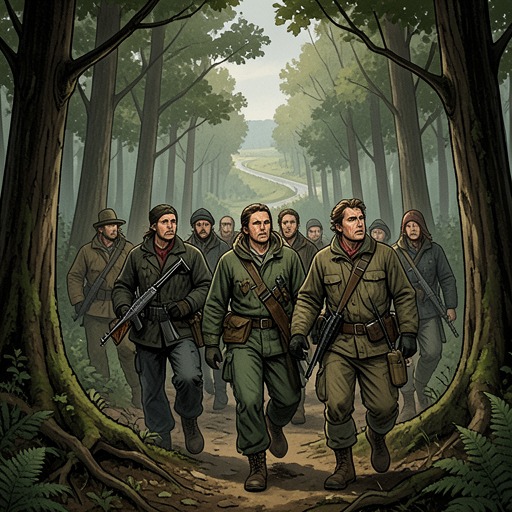
The truck turns off Interstate 5 toward Oakridge, Oregon, and the women are taken along bumpy roads through green forest dotted with snow. They are not blindfolded, allowing Adrienne to memorize landmarks, but the concession is limited: the road leads into a wooded compound with one narrow entrance and one narrow exit, surrounded by pine trees and reached through mud-covered gravel. Her effort to observe the route becomes an attempt to preserve future escape possibilities, even as the geography is arranged to prevent them.
Conflicting Laws and Mate Claims
The event cannot be separated from Wilder's earlier declaration that he is the Alpha male of his pack, that Adrienne is his mate, and that he will marry her. In the Samsa order, her relationship with Wilder gives the abduction the character of an attack on an Alpha's household and authority. Wilder has also explained that a pregnant mate cannot simply leave with her child because the pup may be endangered and because an heir can become a target of the Ari Kara clan. His language presents protection and possession as inseparable, a tension that becomes stark when Bane's followers exercise the same logic through outright captivity.
The conflict is also visible in Ramsey's complaint that Wilder broke a promise concerning Mena's marriage and allowed a human woman to influence werewolf law. Ramsey asks when the Samsa brothers began allowing a human to dictate their customs, while Wilder answers that Ramsey has no authority to dictate to him and has spoken disrespectfully about his mate. Against that background, the kidnapping is a contest over who may define a woman's mate, movement, marriage, and reproductive future. Mena's return to Alaska and Adrienne's designation as fair game are not private decisions; they are acts in an inter-pack struggle over women, succession, and legitimacy.
The narrative makes the legal conflict especially stark by setting the kidnappers' practices against the protective principles invoked by Adrienne. Bane's followers believe fertile females can be passed among young and old werewolves in the hope of impregnating them, after which the practice continues until the female is physically exhausted. That practice reduces female bodies to pack infrastructure. Adrienne's fear that the hostile werewolves may kill pups not belonging to them reveals the limit of any universal rule against harming mothers: protection depends on lineage, power, and enforcement rather than on a shared moral principle.
Captivity, Resistance, and Consequences
The abduction carries the women toward Bane's sphere of control and initiates a longer pattern of confinement, threats, and attempted escape. At one stage Bane ties Adrienne's hands behind her back, binds her ankles, and fastens her waist to a crude chair made from tree branches. He refuses to gag her, not as an act of mercy, but because he claims he will hear her scream if an animal enters the cave and can then decide whether to rescue her or allow the animals to consume her. The threat joins imprisonment to the wilderness itself, making the natural environment an extension of the captor's power.
Adrienne nevertheless repeatedly converts small openings into resistance. Later, when Bane leaves a suite after cutting the telephone cords and insisting that Wilder can no longer track them, she dresses in soiled leather clothing and Ugg boots, takes food and a coat, and steals the truck keys. Her shaking hands and fear that Bane will smell her do not prevent her from reaching the elevator and attempting to leave through the lobby. The escape is the direct consequence of the earlier captivity: once the kidnappers turn mobility into control, possession of a key, a vehicle, or an unguarded exit becomes a meaningful form of agency.
The abduction also activates the Samsa family's rescue and retaliation logic. Wilder understands that Bane has kidnapped an Alpha's mate and taken another wolf's woman, an offense that must be punished under werewolf law. As head of a pack extending across the Americas to Russia, Wilder sees enforcement as his responsibility. His pursuit is framed as a hunt: Bane is the pursuer who must be hunted, and Wilder must kill or be killed. The event therefore expands from a roadside crime into a struggle over whether the Samsa legal order can protect its members and whether Bane's fixation on Adrienne will be stopped before it reaches the Alaskan wilderness.
Narrative Significance
Adrienne and Mena's abduction concentrates the book's recurring contradiction between protection and control. Wilder calls Adrienne his mate and claims a duty to protect her, but the same werewolf world that promises protection also treats marriage, fertility, and mate status as grounds for restricting a woman's choices. Bane's followers strip away even the protective vocabulary and display the coercive underside directly: Mena is conditionally spared because of her identity and pregnancy, while Adrienne is made available for punishment, exploitation, and forced mating.
The episode also links human trauma to supernatural politics. Before the abduction, Adrienne recognizes the voice of one of the men who raped her in college, an experience that confirms how vulnerable she has been within supposedly human institutions as well as among werewolves. Her flight from Paul began in part because Paul and her parents tried to keep that assault secret. The later kidnapping does not create her distrust of male authority; it repeats and magnifies an older pattern in which men decide what may be concealed, whom a woman must marry, and whether her body can be claimed.
At the same time, the women are not passive symbols within the conflict. Adrienne notices the truck, controls what she tells Mena, uses pregnancy as a tactical claim, studies the route, remembers landmarks, and later takes the keys when an opportunity appears. Mena remains physically beside her, contributes the disclosure of her pregnancy, and shares the danger of being transported to Alaska. Their abduction is therefore both an act of domination and the beginning of a counter-movement in which observation, solidarity, and escape challenge the kidnappers' attempt to make the women interchangeable reproductive property.